
Walk through Kaipātiki on a Sunday evening and you will hear the same thing through half a dozen open windows—a teleserye running in Tagalog while dinner is on. The Filipino community is now one of the fastest-growing in the country, up from 72,612 people in 2018 to 108,297 at the 2023 census, a rise of nearly 50% in five years. Yet the Filipino channels NZ households grew up with are almost invisible on the platforms most Kiwis subscribe to. That gap is the entire reason this guide exists.

Quick Answer: New Zealand’s mainstream television platforms carry effectively no Tagalog programming. The realistic options are the Philippine broadcasters’ own international streaming services — iWantTFC from ABS-CBN and GMA’s international arm — plus a limited amount of free, officially uploaded content. Third-party IPTV is a fourth route, with real caveats.
If you are working out the wider picture for any migrant community here, the International IPTV NZ Guide covers the shared ground, and the Pacific Channels NZ guide sits closest to this one in spirit.
Why Filipino Households in New Zealand Struggle to Find Their Channels
The difficulty is structural, not accidental. New Zealand is a small television market, and pay-TV line-ups are built around what the largest number of subscribers will pay for. A community of just over 100,000 people, spread thinly, has never been large enough to justify a dedicated channel slot on a domestic platform.
Where the Community Actually Lives
Auckland holds roughly 45% of Filipino New Zealanders, with the strongest concentrations in Kaipātiki and Maungakiekie-Tāmaki. But the distribution is unusually even for a migrant community — around 26% live in the South Island, and Ashburton District has one of the highest Filipino population shares in the country, driven by dairy and processing work.
That matters practically. A family in Ashburton or Southland is far more likely to be on fixed wireless or Starlink than on urban UFB fibre — Chorus and the local fibre companies have not reached every rural address — and streaming decisions have to account for that.
Teleserye, News, and the Language Question
Filipino viewing in New Zealand splits into three fairly distinct needs, and conflating them is where most people waste money:
- Teleserye and entertainment — the ABS-CBN and GMA drama catalogues, mostly watched on demand rather than live
- News from home — TV Patrol, 24 Oras and similar bulletins, where being current matters more than being live
- Live events — boxing, basketball, and occasional national broadcasts, where the time difference bites hardest
Tagalog dominates, but it is not the whole picture. Bisaya, Ilocano and Hiligaynon speakers are well represented in New Zealand, and regional-language programming is thinner on every platform discussed below.
Key takeaway: Most Filipino households in New Zealand need on-demand catch-up far more than they need a live channel, and choosing on that basis saves both money and frustration.
What Filipino Content Do Sky NZ and Freeview Actually Carry?

Very little. Sky NZ, the country’s main pay-TV provider, does not currently market a dedicated Tagalog channel or a Filipino package, and Freeview’s free-to-air line-up has none either. TVNZ+ and ThreeNow, the two main free New Zealand streaming services carry no Philippine programming. Verify the current line-up at sky.co.nz before assuming.
This is worth stating plainly because newly arrived families often spend months assuming they simply have not found the right menu. They have not missed anything. The content is not there.
Sky NZ is New Zealand’s satellite and streaming pay-TV operator; Sky Sport Now is its separate streaming-only sport product. Whakaata Māori, TVNZ 1 and Three are domestic broadcasters with no international-language remit beyond te reo Māori.
Official Ways to Watch Filipino Channels in New Zealand
The good news is that the Filipino channels NZ viewers care about are mostly reachable through the networks’ own international services, and both major Philippine broadcasters serve New Zealand directly. These are the licensed routes, and they should be your first stop.
iWantTFC — ABS-CBN’s Own Platform
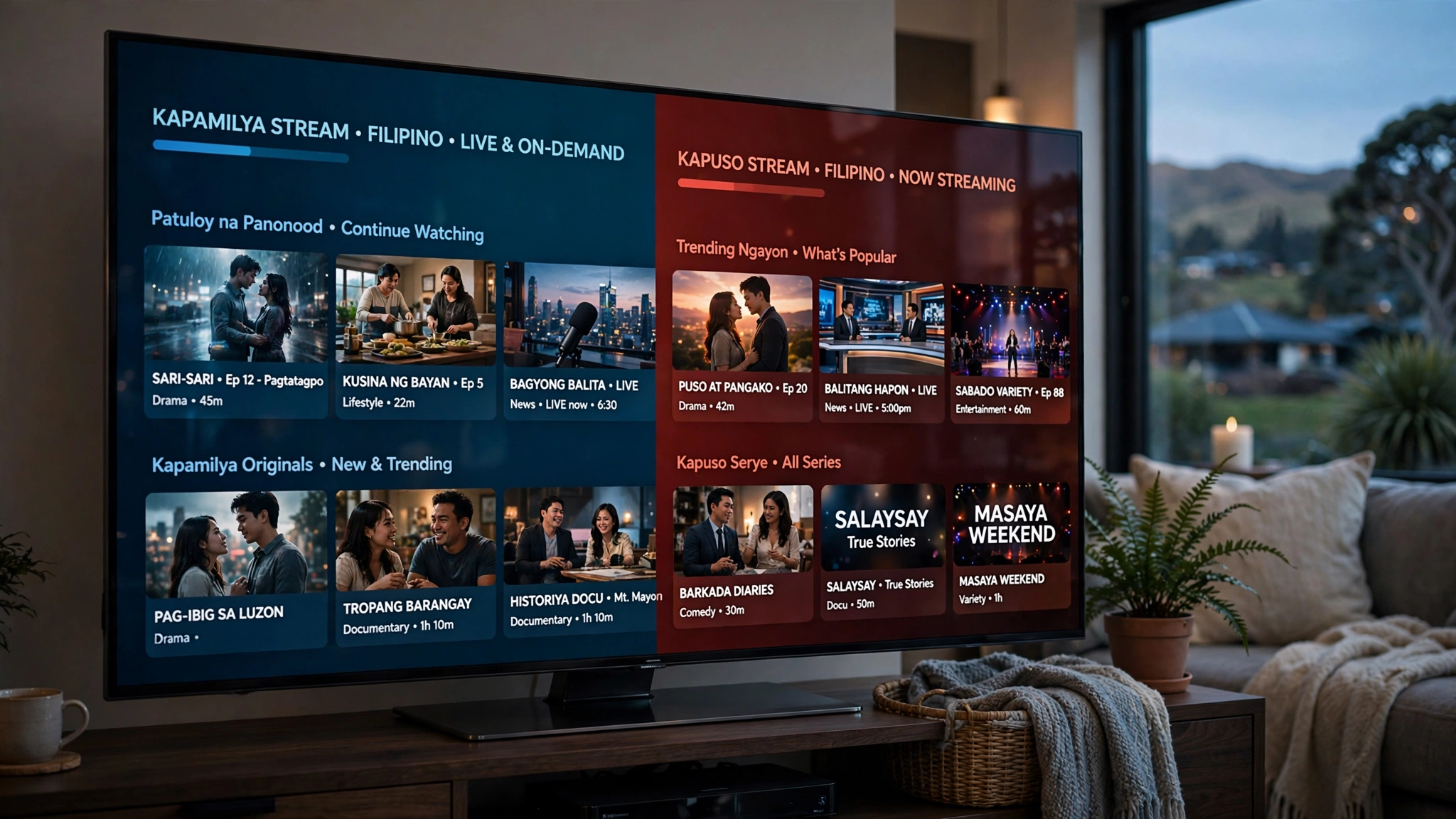
iWantTFC is ABS-CBN’s international streaming service and the successor to the old TFC cable product. It carries the Kapamilya catalogue — teleserye archives, films, news and originals — as an app on phones, tablets, Smart TVs and streaming sticks. ABS-CBN operates a New Zealand-specific subscription path, so this is not a service you are accessing sideways; it is sold to New Zealand residents directly.
Pricing tiers appear at checkout rather than on a public price list, and they change. Check the current plan and currency on the iWantTFC site before subscribing rather than relying on any figure quoted elsewhere.
GMA Pinoy TV and GMA’s International Service
GMA Network runs GMA Pinoy TV, GMA Life TV and GMA News TV for overseas audiences, plus an on-demand catalogue through its international site. GMA is the Kapuso network — if the household watches 24 Oras or GMA dramas, this is the side of the Philippine market you need, and it is genuinely separate content from ABS-CBN’s.
The two networks’ catalogues barely overlap, which is why plenty of Filipino families overseas end up paying for both. That is worth knowing before you assume one subscription covers everything.
Free and Officially Uploaded Content
Both networks maintain large official YouTube channels carrying full news bulletins, clips and, in some cases, complete episodes after broadcast. For a household that mainly wants news from home, this covers a surprising amount at no cost and with no licensing ambiguity at all.
Key takeaway: ABS-CBN and GMA are separate catalogues with little overlap, so decide which network your household actually watches before paying for anything.
Comparison Table — Filipino Viewing Options in New Zealand
| Option | What it carries | Live or on demand | Devices | Cost | Status |
|---|---|---|---|---|---|
| iWantTFC | ABS-CBN / Kapamilya catalogue, news, films | Both | Phone, tablet, Smart TV, streaming stick | Verify current pricing at source | ✅ Official |
| GMA international | GMA / Kapuso dramas, 24 Oras, news | Mostly on demand | Phone, tablet, web, Smart TV | Verify current pricing at source | ✅ Official |
| Official YouTube channels | News bulletins, clips, some full episodes | On demand | Any | Free, ad-supported | ✅ Official |
| Sky NZ / Freeview | No Filipino package marketed | — | — | — | ✅ Official, but not applicable |
| Third-party IPTV | Varies entirely by provider | Usually live | Depends on app | Varies | Verify during trial |
Prices correct as of September 2026 — verify current plans before subscribing.
Where Filipino Channels NZ Coverage Falls Short
Even with both official services running, three gaps remain, and no platform discussed here closes them completely.

Regional-language programming is thin. Bisaya and Ilocano content exists on Philippine free-to-air but rarely survives the trip to an international package. Households outside the Tagalog-speaking regions consistently get less than they expect.
Live Philippine sport is the hardest category. PBA basketball and domestic boxing rights are licensed separately from general entertainment, and international streaming packages frequently exclude them. Never assume a subscription that carries dramas also carries the game.
The time difference is structural. The Philippines runs four hours behind New Zealand in winter and five during daylight saving. A 7pm Manila broadcast lands at 11pm or midnight here. For anything live, this is not a technical problem you can solve – it is a scheduling one, and it is why on-demand access is worth more to most families than a live feed.
How Third-Party IPTV Fits — and What to Check First
Some third-party IPTV services include Philippine channels in their international line-ups. Availability varies enormously by provider and changes without notice because these services are not the rights holders — they redistribute, and what they carry this month may not be there next month.
Two distinctions matter before you go further.
Player Versus Service
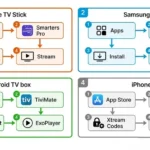
An IPTV player is software — IPTV Smarters Pro, TiviMate and similar apps. It supplies no channels of its own. An IPTV service is the source of the channels. A well-reviewed player tells you nothing about whether a given service carries Filipino content. The best IPTV app guide covers the software side; it is a separate question from what you will actually be able to watch.
What to Verify Before You Commit
If you are evaluating any third-party service, check the channel list for the specific Philippine networks you want before subscribing, not after. Test during a trial period if one is offered, and check at your normal viewing time — evening congestion behaves differently from a midday test. Households on rural fixed wireless or Starlink should read the internet speed guidance first, since latency rather than raw bandwidth is usually what breaks a live stream.
When This Route Is Not Worth It
If your household watches teleserye and news on demand — which describes most Filipino families I deal with here — a third-party service adds risk without adding much. The official platforms already carry that content reliably, on your own schedule, with no channel list to re-verify every few months. The third-party route only becomes interesting when someone specifically wants live Philippine broadcast, and even then the sport caveat above applies.
Key takeaway: A third-party IPTV service is only worth considering if you specifically need live Philippine broadcast, and it must be verified against your actual channel list before you pay.
Is It Legal to Watch Filipino Channels in New Zealand?
Watching content through an officially licensed service — iWantTFC, GMA’s international platform, or either network’s official YouTube channels — is straightforward and legal in New Zealand. The position becomes less clear with third-party services, where the question is whether the provider holds distribution rights for the channels it carries. That is the provider’s licensing status, not yours.
New Zealand copyright sits under the Copyright Act 1994. The Copyright (Infringing File Sharing) Amendment Act 2011 — the so-called three strikes regime — was written around peer-to-peer file sharing, which is a different technical activity from streaming; the two are not treated identically, and the current status of that regime is worth checking rather than assuming. The Broadcasting Standards Authority handles broadcasting standards complaints, not copyright, and the Commerce Commission deals with misleading claims under the Fair Trading Act.
The practical point for a Filipino household: the official routes carry no ambiguity, and they carry most of what you want. Start there.
This article is for educational and comparison purposes only. Verify the licensing status of any streaming service and ensure compliance with New Zealand copyright law before subscribing.
For the wider picture, see Is IPTV Legal in NZ.
Explore More
International IPTV NZ
- International IPTV NZ Guide
- Pacific Channels NZ
- Indian Channels NZ
- Chinese Channels NZ
- Korean Channels NZ
- Arabic Channels NZ
Setup & Devices
Guides
Bottom Line
If your household mainly watches teleserye and catches up on news: subscribe to whichever network’s catalogue you actually watch — iWantTFC for Kapamilya, GMA’s international service for Kapuso — and use the official YouTube bulletins for daily news. This covers most Filipino families in New Zealand and needs nothing else.
If you have older relatives who want a live channel running: the official apps on a Smart TV or streaming stick get closest, but accept that a Manila evening broadcast arrives here near midnight. On-demand playback at a sensible hour is usually the better answer than chasing a live feed.
If you specifically want live Philippine sport: check the channel list before paying anything, on any platform. PBA and boxing rights are licensed separately from entertainment, and a package full of dramas may carry none of it. This is the one case where the Filipino channels NZ market genuinely has no clean solution yet.
Sources
- Stats NZ, 2023 Census population counts by ethnic group — stats.govt.nz
- GMA Network international service — gmanetwork.com/international
- ABS-CBN / iWantTFC — mytfc.com